Layered Lighting for Small Living Rooms: A Practical Plan
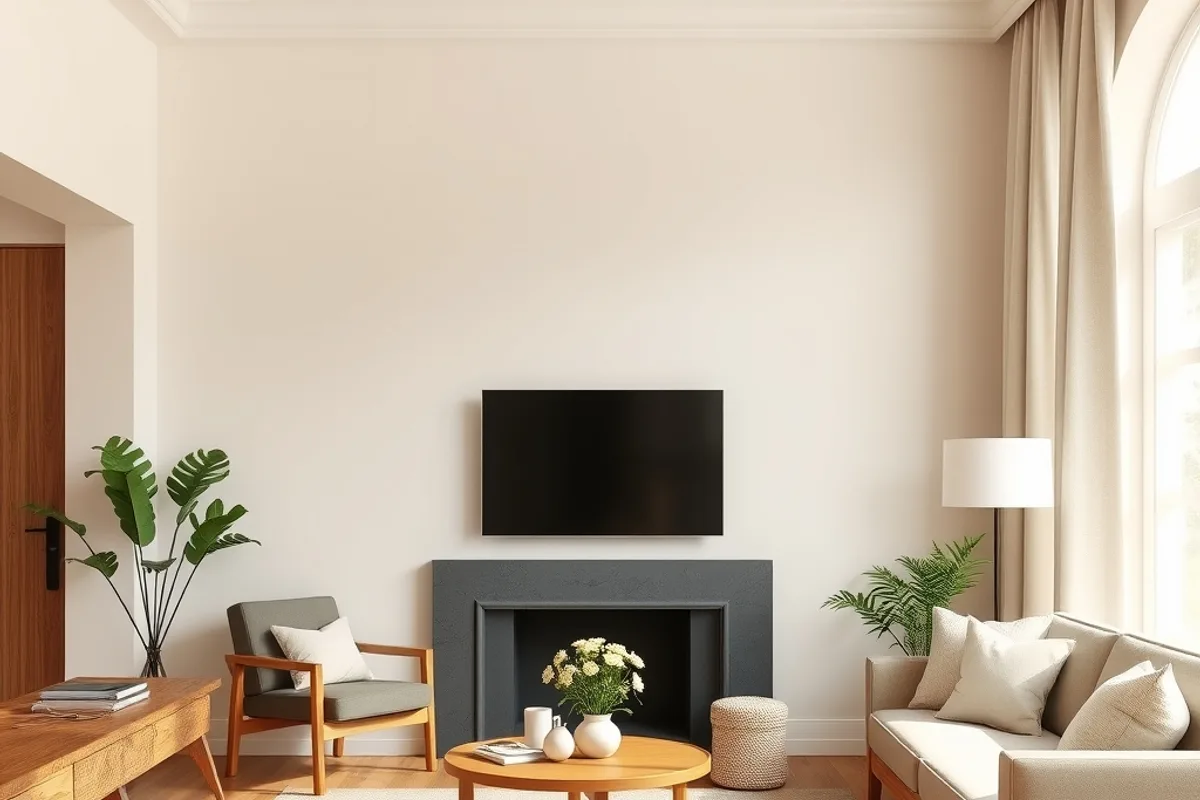
A small living room does not feel small because of its floor area. It feels small because a single ceiling light flattens everything into one bright, shadowless box. The room has nowhere to recede, so the eye has no depth to travel through. Layering fixes that, and it costs less than most people expect.
Start with ambient light, but turn it down
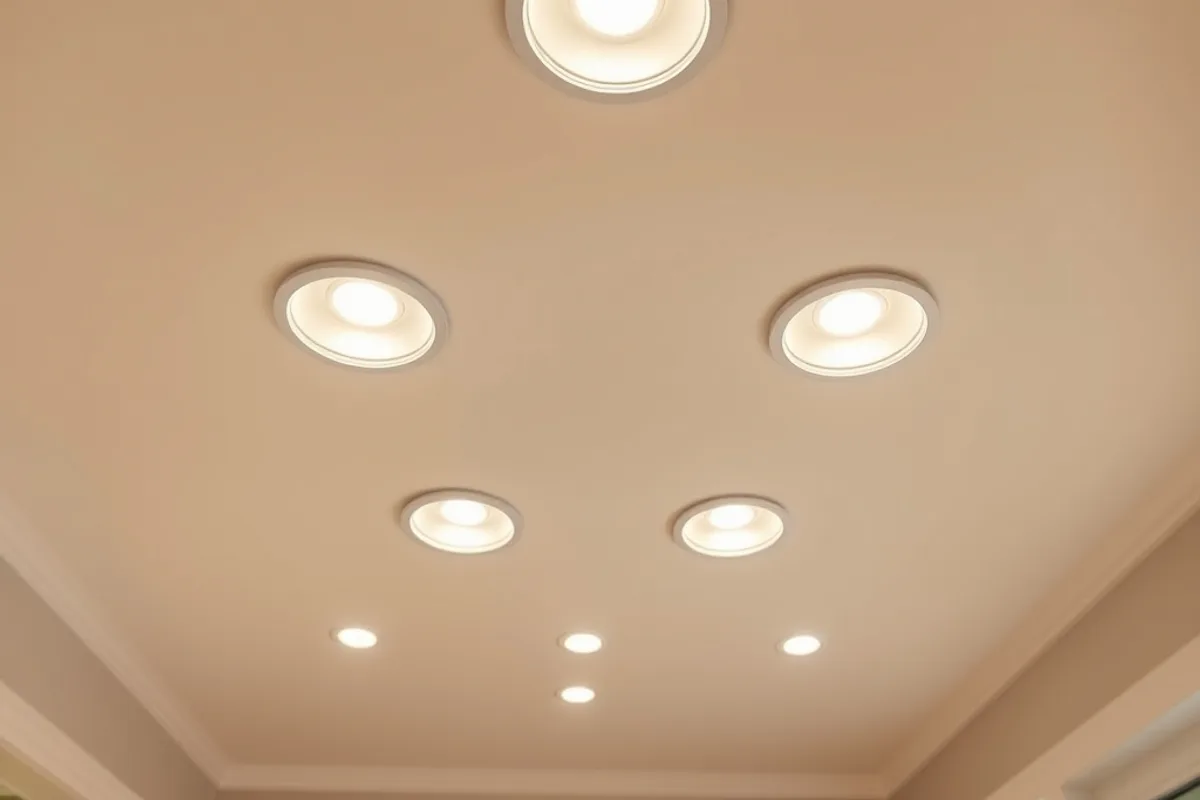
Ambient light is the general wash that lets you move around safely. In a small room, one central pendant at full brightness becomes the whole design, which is why the room looks like a waiting area. Keep the ceiling fixture if it is well placed, but put it on a dimmer and treat it as background.
As a rule, aim for about 100 to 150 lumens per square metre of general light in a living room, then reduce it in the evening. A 12-square-metre room needs roughly 1,200 to 1,800 lumens spread across several fixtures rather than concentrated in one. Two smaller ceiling fittings often distribute light more evenly than one large one, and they cast fewer hard shadows on the walls.
Task light where you actually sit
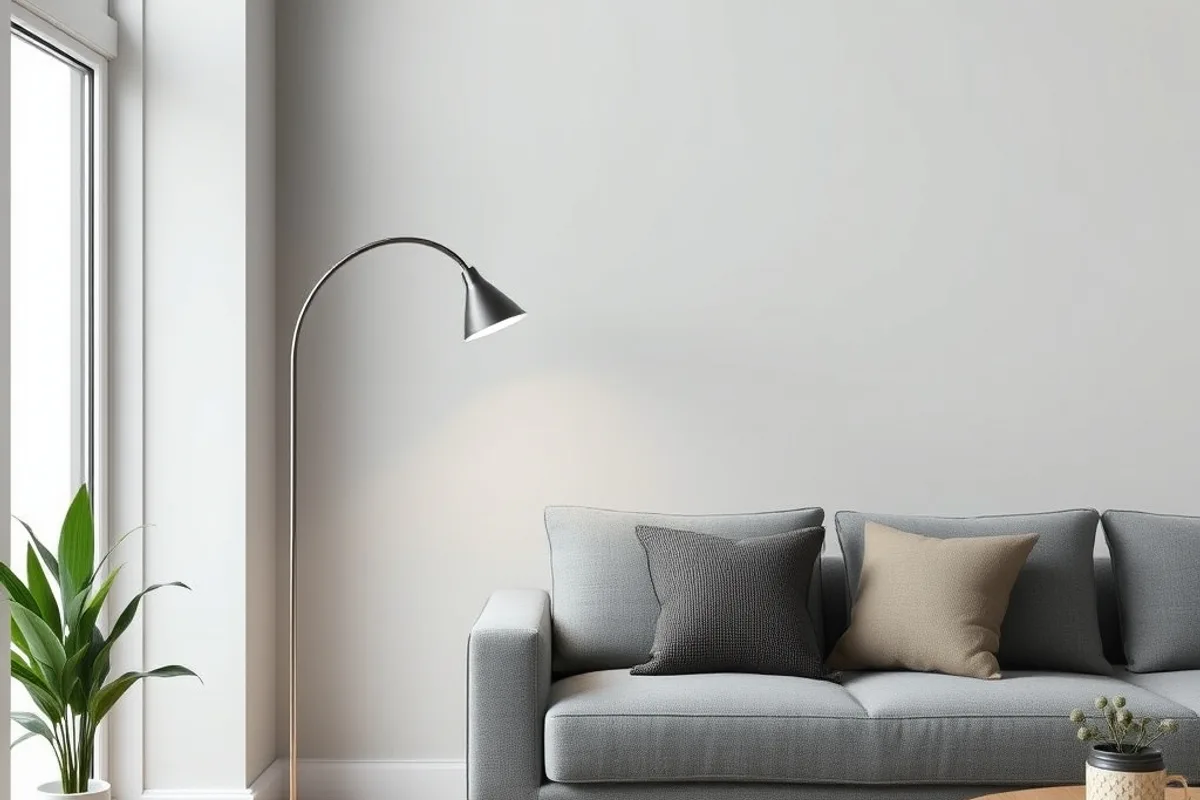
The second layer follows use. A floor lamp beside an armchair for reading, a table lamp on the side table, a swing-arm wall light over a sofa where someone works on a laptop. Each should be independently switchable, because the room is used differently at seven in the morning and ten at night.
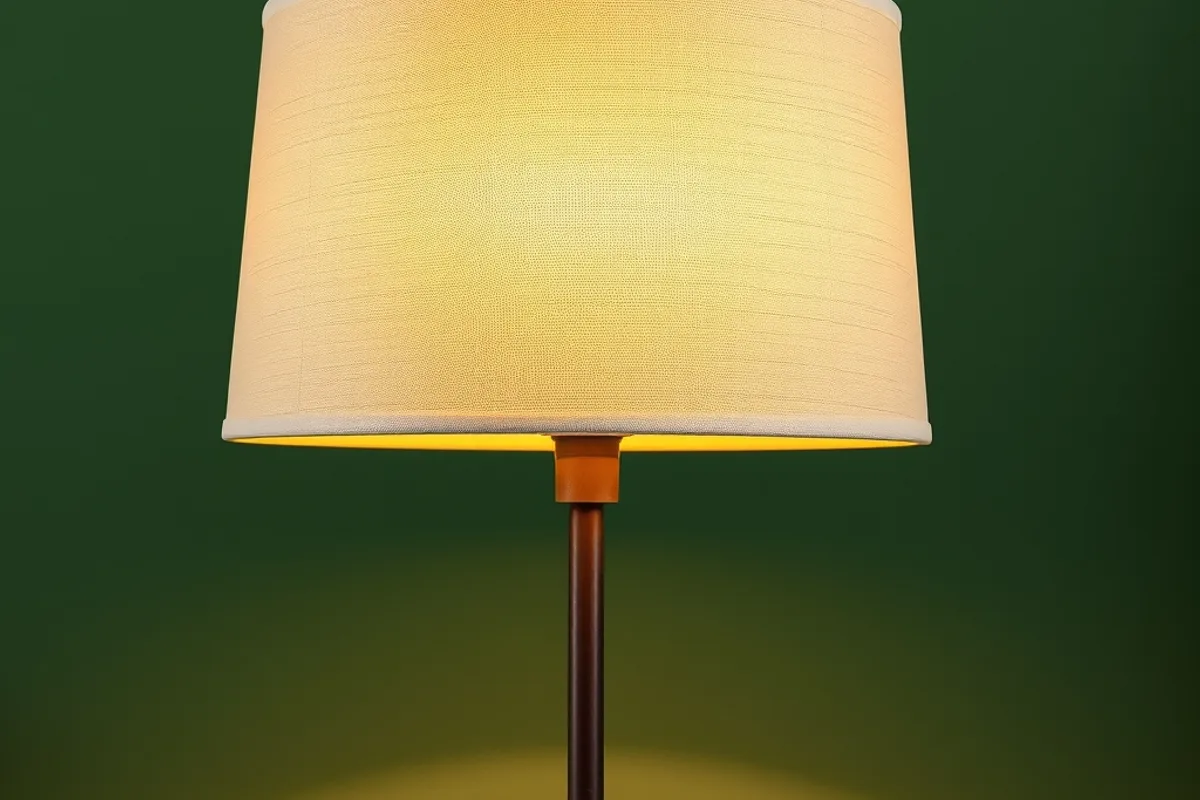
For reading, the lamp shade should sit roughly at eye level when you are seated, around 100 to 110 centimetres from the floor for most sofas. The light should fall onto the page, not into your eyes. A shade with a diffuser or a linen drum softens the glare and prevents the hard bright circle that makes a small room feel clinical.
Choose the bulb before the fixture
Bulb choice matters more than the lamp. Buy 2700K warm white, a colour rendering index of 90 or above, and dimmable. Cheap bulbs at 4000K or 6500K turn timber floors grey and make painted walls look institutional. Wattage is no longer a useful guide; read the lumen output and the colour temperature on the box.
If the lamp takes an E27 bulb, a 6 to 8 watt LED produces roughly 500 to 700 lumens, which is right for a table lamp. For a reading floor lamp, go closer to 800 to 1,000 lumens with a focused shade. Two weaker lamps almost always look better than one strong one.
Accent light for depth and shadow
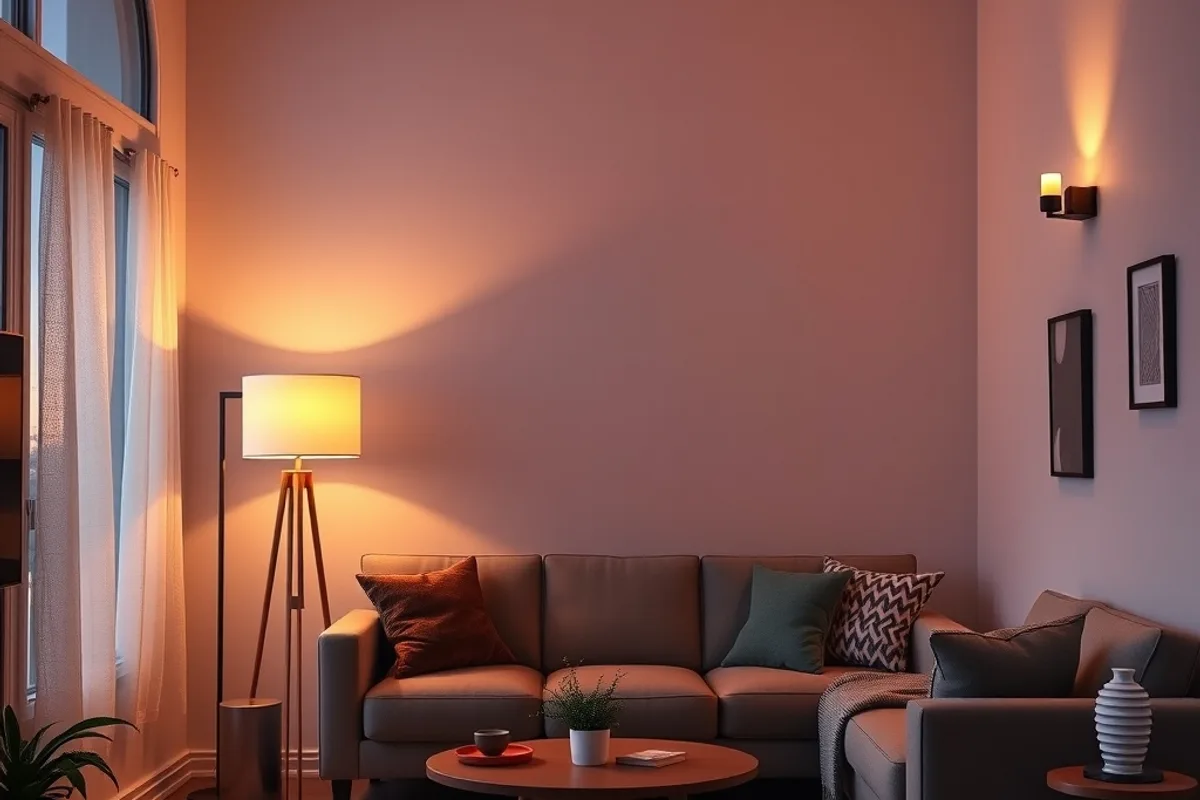
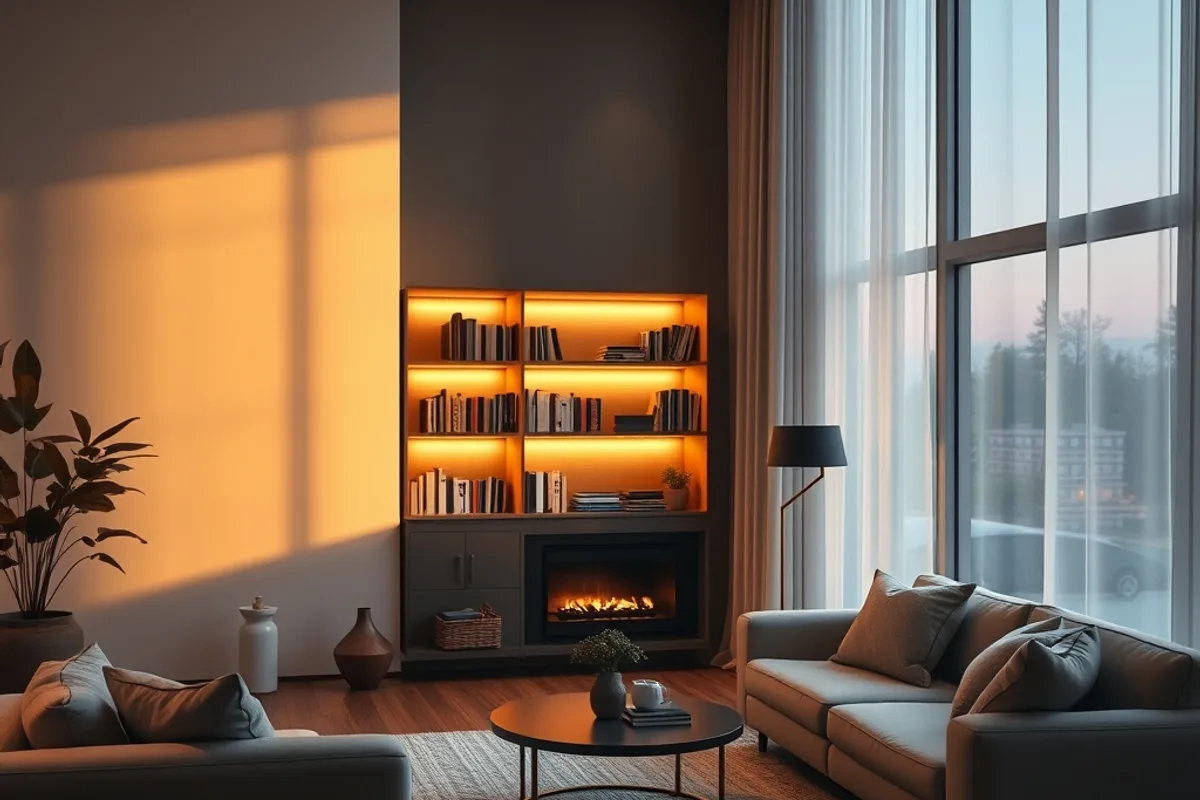
Accent light is the layer most small rooms lack. It does not light the room; it lights a surface, a plant, a picture or a corner, and it creates the shadows that give a space dimension. A wall sconce, a picture light, a small uplighter behind a plant, or an LED strip concealed above a shelf all do the same job: they pull the eye sideways and upward.
In a compact room, three accent points are enough. One at each end of the longest wall and one in a corner behind a plant or chair prevents the dead zones that make a room feel tight. Keep accent fixtures at 10 to 20 percent of the ambient output so they read as texture rather than task lighting.
Wall washing is an underused trick. Placing a sconce or a floor uplighter about 20 to 25 centimetres from a wall lets the light graze the surface, which makes the wall look further away. In a room under 15 square metres, that single gesture can do more than removing a piece of furniture.
Positions, heights and cable management
Set lamps before you commit to furniture. A floor lamp belongs where a chair will sit, not where a socket happens to be. If sockets are scarce, choose rechargeable table lamps or run a slim extension lead behind the skirting and hide it with cable trunking painted to match the wall.
For a pendant over a coffee table, the shade bottom should sit around 170 to 190 centimetres above the floor so nobody walks into it but the light still reaches the table. For sconces, 150 to 170 centimetres to the centre of the fixture works in most living rooms. Mark positions with tape and live with them for a day before drilling.
Warm the surfaces, not just the air
Light bounces, so every surface is part of the lighting scheme. Matte walls diffuse light softly; gloss paint creates sharp reflections that can look busy in a small room. A pale ceiling helps general light travel, while a darker wall behind the sofa lets the room recede and makes the seating area feel intentional.
Fabric matters too. Linen and wool shades and upholstery absorb light and produce a softer fall-off than leather or gloss lacquer. If the room already feels bright and echoing, add texture before adding more lamps: a heavy curtain, a wool rug, a linen shade. The light will change without a single new socket.
A simple shopping order
Buy in this sequence: dimmer for the ceiling fixture, one good reading floor lamp, two matching table lamps, then accent pieces. Matching pairs on either side of a sofa or console create rhythm and make a small room look deliberate. Do not buy a chandelier for a low ceiling; it will dominate the volume and block sightlines.
Spend the extra on dimmable bulbs and a quality dimmer rather than on the fixture itself. A modest lamp with a good bulb and a smooth dimmer outperforms an expensive shade with a harsh, flickering bulb. For the finishing layer around the lighting, our guide to paint colours that age well explains how to choose a wall tone that works under warm evening light.
The bottom line
Small rooms are not short of space; they are short of light at different levels. Put the ceiling on a dimmer, add a reading lamp where you sit, place two or three accent lights to create depth, and use 2700K bulbs with a high colour rendering index. Three layers, three switches, one room that finally feels bigger after dark.
For official guidance, see International Code Council building standards.
We cross-check our advice against independent, official sources. For construction cost data see the National Association of Home Builders, and for building standards see the International Code Council.